
The Opedia Network
MufflersOpedia
Your guide to trusted muffler repair, replacement, inspection, maintenance, safety, and services.
Find Services Near YouFind local muffler and exhaust help, learn common warning signs.
Search for nearby muffler and exhaust shops, repair help, replacement options, and local noise, rust, leaks, fumes, tailpipes, and exhaust services.


A Practical Guide to Muffler Noise, Exhaust Leaks, Fumes, and Local Repair Options
MufflersOpedia helps you understand common muffler and exhaust problems before you call a shop. Learn what loud noise, rust, fumes, leaks, rattling, loose tailpipes, and replacement questions may mean, then use the local search tools to look for nearby muffler and exhaust service options.

How Do I Know If My Muffler or Exhaust Needs Attention?
A muffler or exhaust problem often announces itself before a driver can see it. Warning signs include a deeper roar, sharp ticking, rattling underneath the vehicle, a loose or crooked tailpipe, visible rust, fumes near the cabin, or a smell of exhaust around the car. Some problems are mostly noise and comfort issues, while others involve leaks, loose support hardware, emissions equipment, or safety concerns. MufflersOpedia helps visitors recognize those symptoms, understand the parts involved, and ask better questions before choosing a local muffler or exhaust repair option.

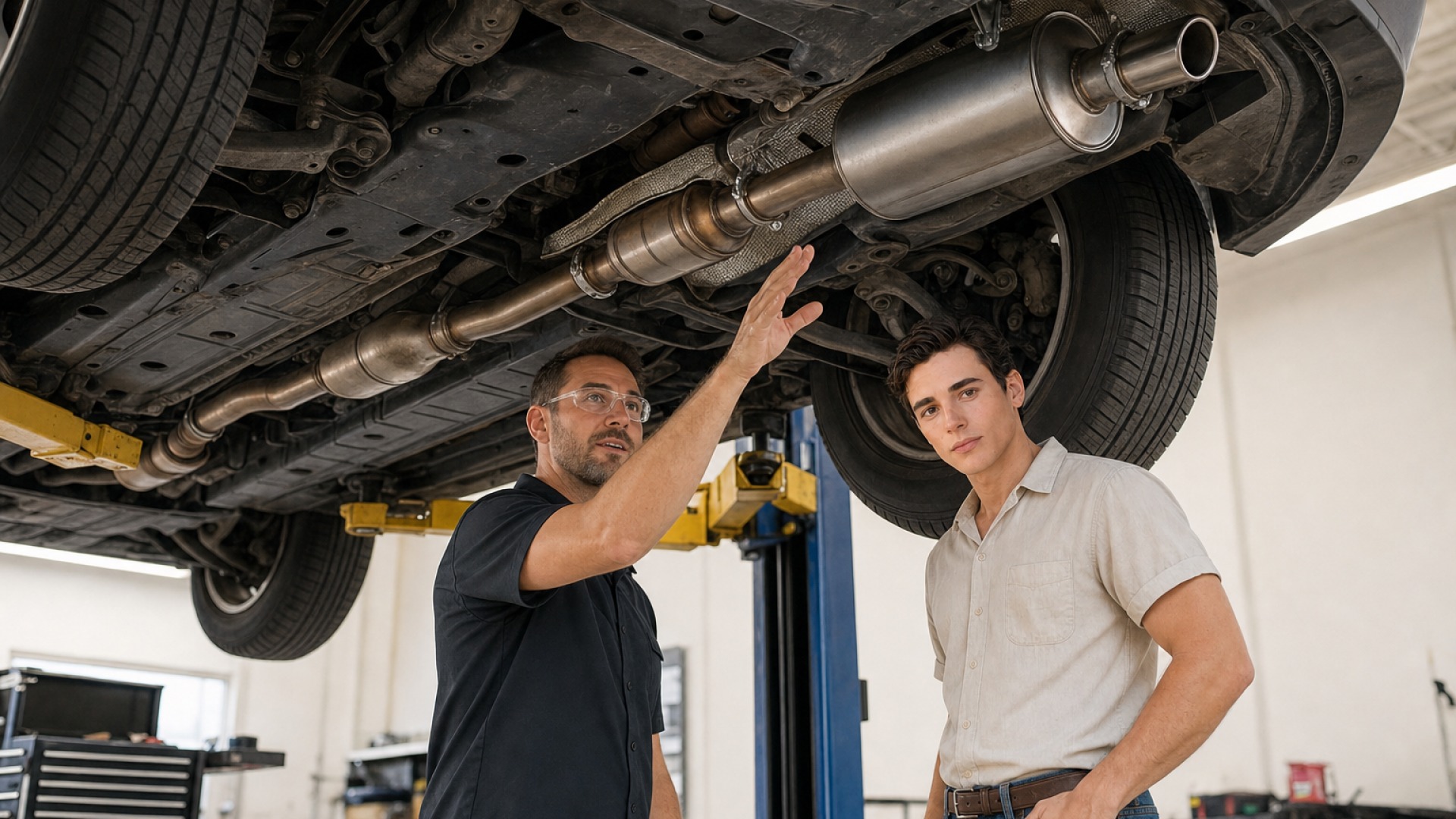
What Does a Muffler Actually Do?
A muffler reduces the noise created as exhaust gases leave the engine. Inside the muffler, chambers, tubes, and sound-deadening design help quiet the pressure pulses that would otherwise make the vehicle painfully loud. The muffler is only one part of the exhaust system, but it works with the catalytic converter, resonator, pipes, gaskets, hangers, and tailpipe to move exhaust gases away from the vehicle. When a muffler fails, drivers may notice a deeper roar, rattling, vibration, visible rust, or fumes near the car. Understanding the muffler's job helps consumers ask better questions when a shop recommends repair or replacement.


Why Is My Exhaust Suddenly Loud?
A sudden roar, rumble, hiss, buzz, or rattle from underneath the vehicle can point to different exhaust problems. A deep roar may suggest a hole or separation near the muffler or pipe. A sharp ticking or hissing sound can come from a leak at a gasket, flange, manifold area, or pipe connection. Rattling may mean a loose heat shield, broken hanger, damaged clamp, or internal muffler failure. Noise alone does not prove which part is bad, but it is a useful warning sign. MufflersOpedia helps drivers describe the sound, notice when it happens, and understand why a proper inspection matters.

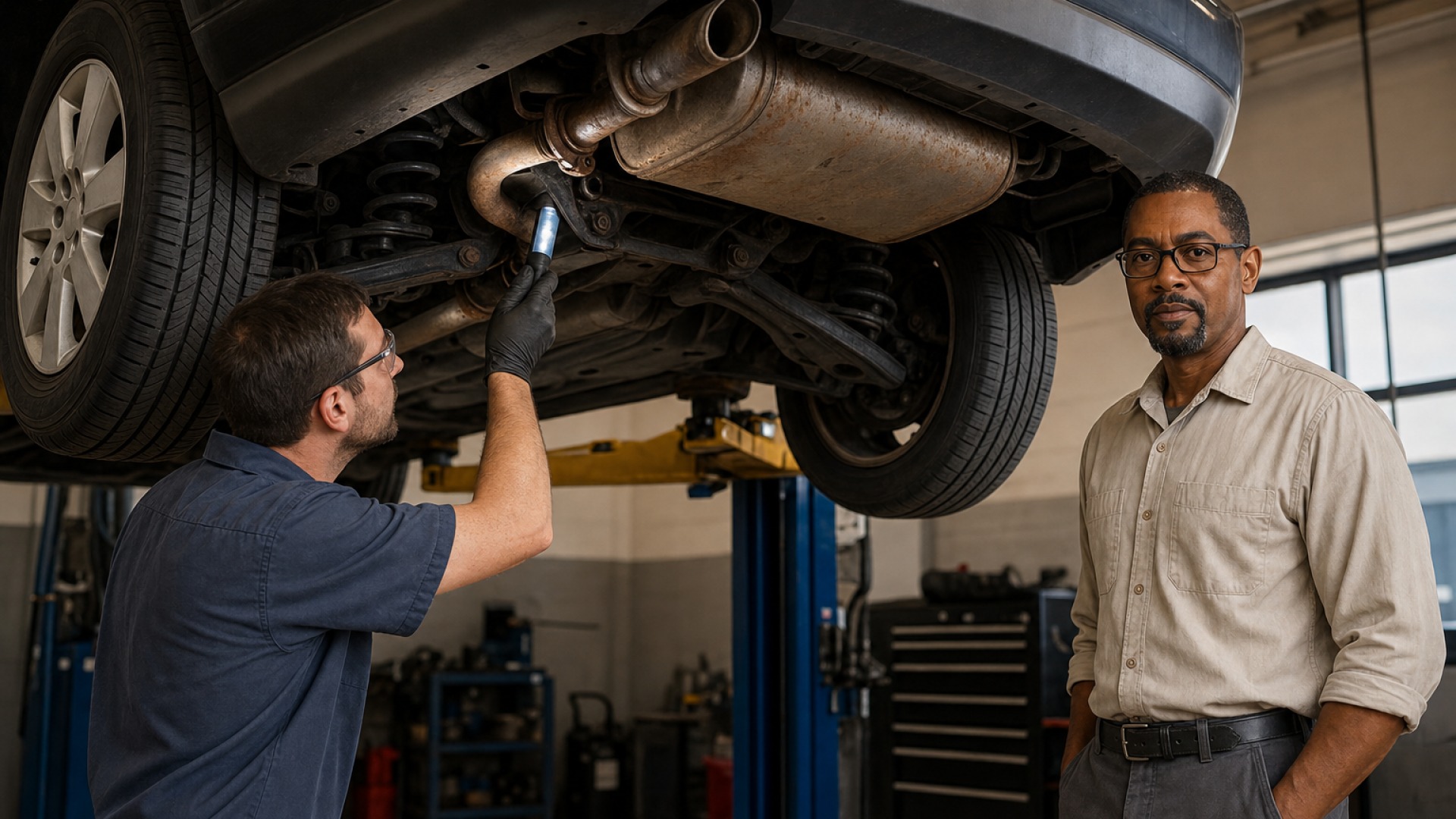
Is Rust, a Hole, or an Exhaust Leak Serious?
Mufflers and exhaust pipes live under the vehicle, where water, salt, road debris, heat cycles, and age can take a toll. Surface rust is common, but deep rust, holes, cracked seams, loose joints, and separated pipes can change the sound of the vehicle and allow exhaust gases to escape before reaching the tailpipe. Exhaust leaks can also create fumes, vibration, and failed inspections in some areas. A shop may recommend welding, a clamp repair, a pipe section, a muffler, or a larger exhaust replacement depending on the condition. The right answer depends on safety, fit, corrosion, and remaining life.

Is It the Muffler, Catalytic Converter, Resonator, or Pipe?
Many drivers use the word muffler for almost anything under the car, but the exhaust system includes several parts. The catalytic converter helps reduce harmful emissions. A resonator may tune or reduce certain sound frequencies. The muffler quiets the exhaust note. Pipes connect the system from front to rear, hangers support it, clamps and flanges hold sections together, and the tailpipe releases exhaust gases behind the vehicle. Confusing these parts can make estimates harder to understand. MufflersOpedia helps visitors recognize the basic roles so they can ask whether a quote involves the muffler itself, another exhaust part, or a larger system repair.
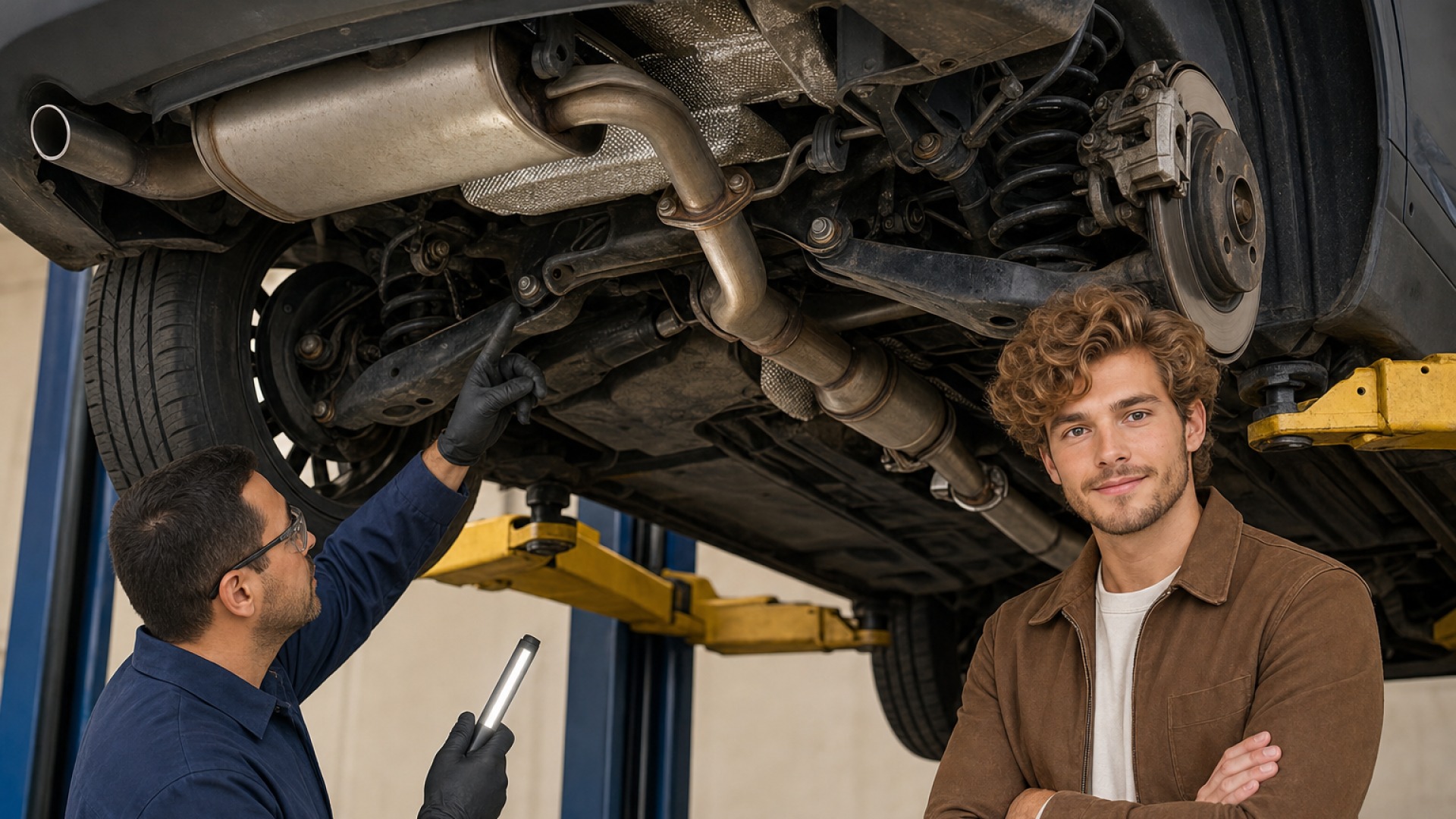
What Happens When Exhaust Pipes, Hangers, or Clamps Fail?
A muffler problem is not always the muffler itself. Exhaust systems depend on pipes that are properly routed and sealed, hangers that hold the system in place, clamps and flanges that keep sections tight, gaskets that prevent leaks, and heat shields that protect nearby parts from excess heat. A small failed hanger can make the exhaust bang, sag, or stress another connection. A loose shield can sound like a serious rattle. A leaking gasket can mimic a larger failure. MufflersOpedia helps consumers understand why a careful inspection may find a smaller support, sealing, or mounting issue instead of a full muffler replacement.
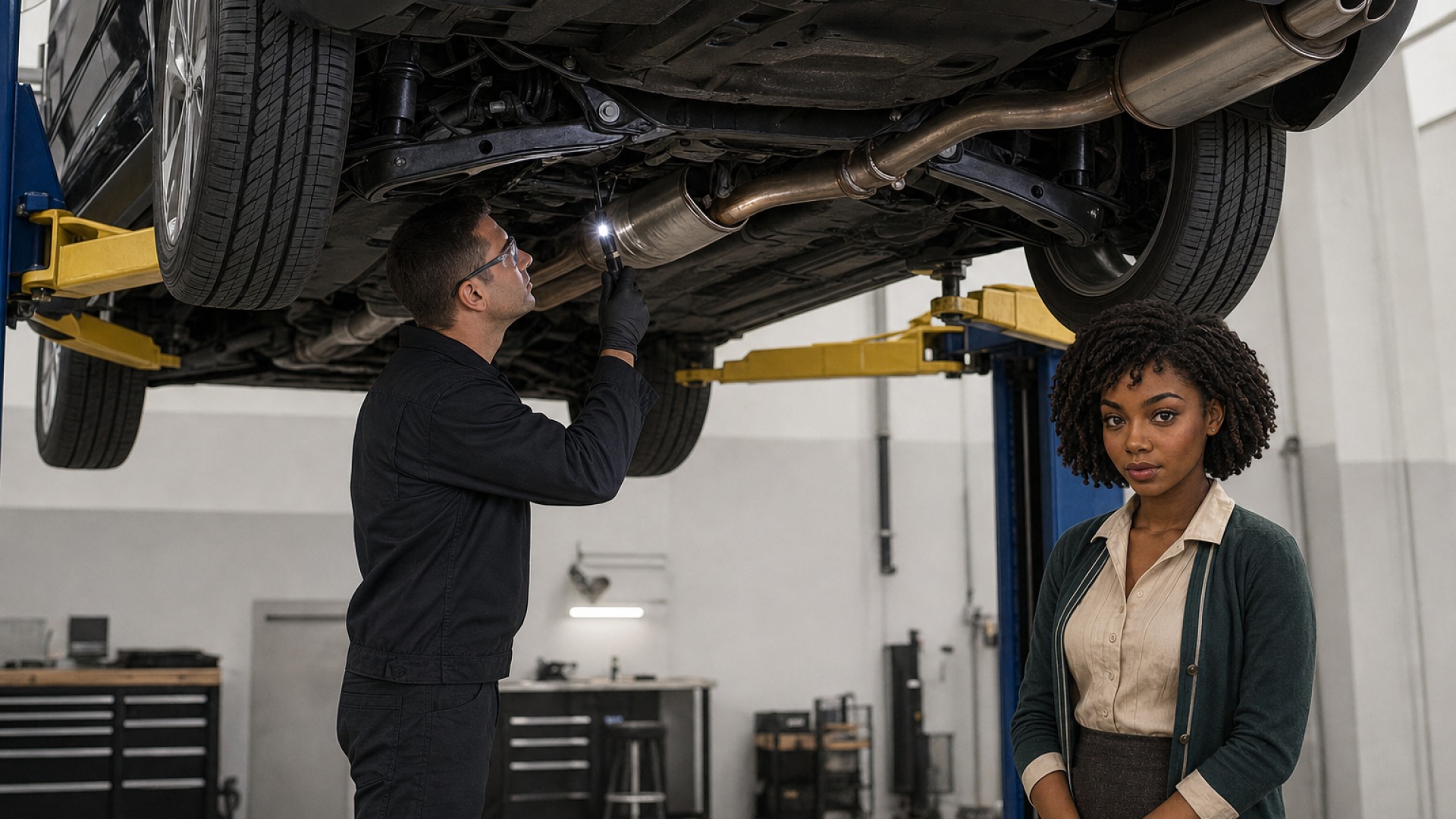
Why Do I Smell Exhaust Fumes In or Around My Vehicle?
Exhaust fumes should leave through the tailpipe, not collect under the vehicle or enter the cabin. A strong exhaust smell, burning odor, headache, dizziness, or fumes near windows, doors, floor areas, or the trunk can be a serious warning sign. Leaks near the front or middle of the exhaust system may be especially concerning because gases can reach the passenger area before they exit behind the vehicle. Drivers should not ignore suspected fumes, especially when children, older adults, or long trips are involved. MufflersOpedia encourages consumers to treat exhaust smells as a safety issue, not just a noise complaint.
Should I Repair, Patch, Weld, or Replace My Muffler?
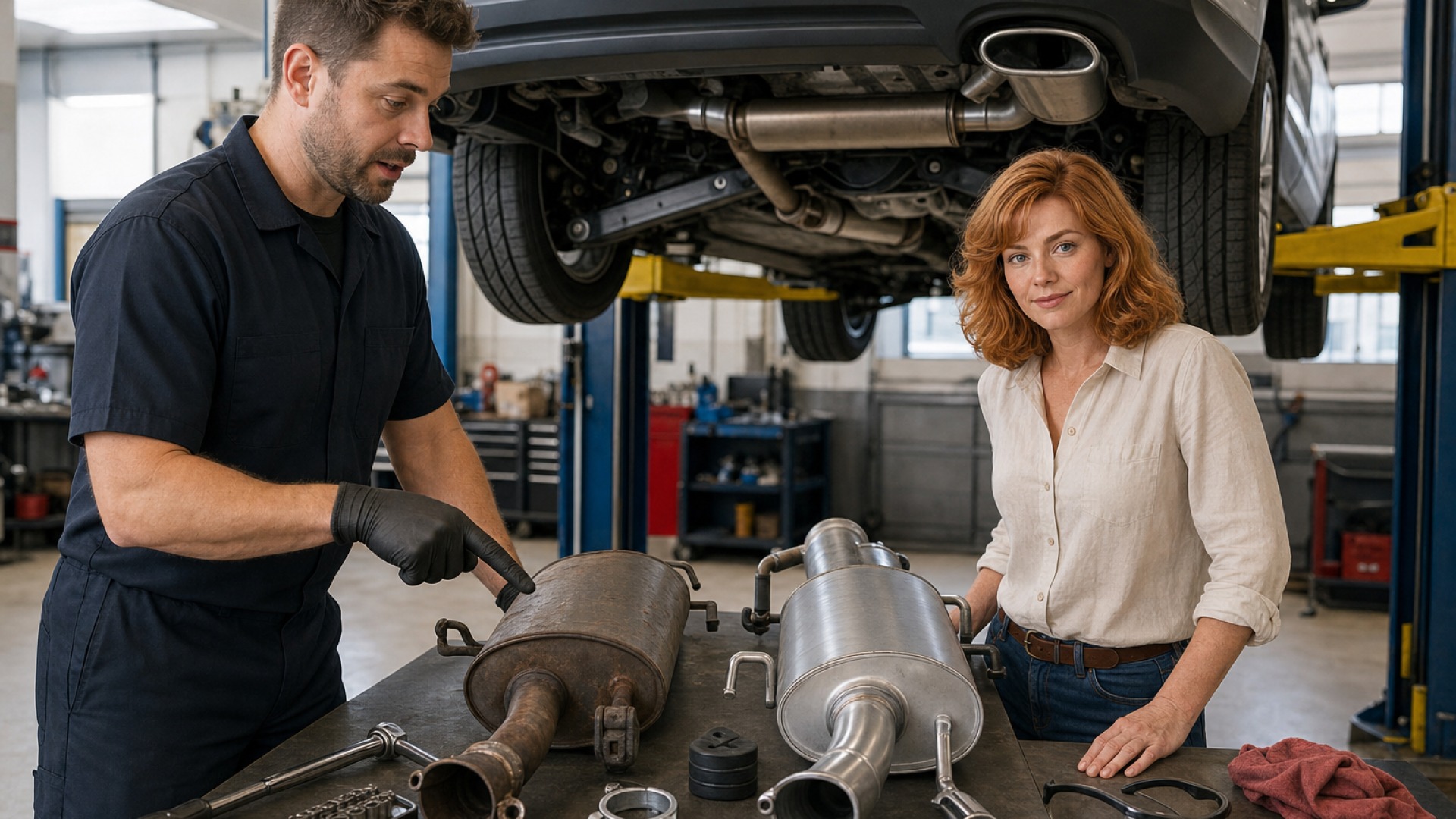
Some exhaust problems can be repaired, while others call for replacement. A clamp, gasket, hanger, or short pipe section may solve a limited problem. A small weld may help in certain situations if the surrounding metal is strong enough. But a muffler with widespread rust, thin metal, broken seams, internal failure, or multiple leaks may not be worth patching. The age of the vehicle, local inspection rules, part availability, labor cost, and how long the owner plans to keep the car all matter. MufflersOpedia helps visitors understand why the cheapest short-term repair is not always the best value.

Should I Consider a Performance Exhaust?
Performance exhaust changes can affect sound, appearance, airflow, emissions compliance, and daily comfort. Some drivers want a deeper tone, but louder is not always better. A poorly chosen system can drone on the highway, fail to fit correctly, trigger inspection problems, disturb neighbors, or reduce enjoyment of the vehicle. Quality installation matters because pipe routing, hanger alignment, clearance, sealing, and tailpipe placement all affect the final result. MufflersOpedia helps consumers ask practical questions about sound level, legal requirements, warranty, emissions equipment, fitment, materials, and whether the change matches how the vehicle is actually used.

What Should I Ask Before Approving Exhaust Work?
Before approving muffler or exhaust work, consumers can ask what part failed, whether the problem is noise, leak, rust, fit, emissions, safety, or support hardware, and whether the recommended repair replaces only the damaged section or a larger assembly. It is reasonable to ask about parts quality, labor, warranty, inspection requirements, expected sound, and whether any nearby parts are also worn. Photos or a brief look under the vehicle can make the estimate easier to understand. MufflersOpedia helps visitors approach the conversation with better questions so they can feel informed instead of rushed.

Which Muffler or Exhaust Problems Should Not Wait?
Some muffler and exhaust problems are mostly noise or comfort issues, but others deserve prompt attention. Exhaust fumes inside the vehicle, a strong exhaust smell near the cabin, a sudden loud roar, a dragging tailpipe, a pipe hanging low, visible holes near the front or middle of the exhaust system, or rattling that suggests loose hardware should not be ignored. These symptoms may involve safety, emissions, support brackets, heat shielding, or exhaust gases escaping where they should not. MufflersOpedia helps visitors understand which signs may be minor and which should be inspected soon before a small exhaust problem becomes a larger repair or a safety concern.

For Local Businesses, Content Creators, and Prize Sponsors
Interested in learning how MufflersOpedia and the Opedia Network may help you reach new customers, create new opportunities, or increase your cash flow? Please check all that apply below.